Sugar Baby Wardrobe: What Is Really Worth Buying?

Reading time: 13 minutes
A college student from Chicago invested $2,400 in her first sugar baby wardrobe - after six months she had never worn 60 percent of it. The problem: she bought what Instagram influencers wore instead of analyzing which occasions actually take place in her city. The right clothing for a sugar baby is not a question of the highest price, but of strategic selection based on your specific environment and the events you attend.
According to a survey on MySugardaddy, 73 percent of active sugar babies spend between $800 and $3,000 a year on their wardrobe. But only 41 percent of them describe their purchases in hindsight as "strategically sensible." This article shows you which pieces deliver a real return on investment and where you can save without worry.
The foundation: these investments are guaranteed to pay off
A timeless blazer in navy or black is the most important single piece of your sugar baby wardrobe. Quality brands like Massimo Dutti or COS offer models between $150 and $280 that last five years with proper care. A well-fitting blazer works for a business lunch at a downtown hotel restaurant just as well as for a gallery opening in Chelsea.
The little black dress remains indispensable, but look for modern cuts. Brands like Sandro or Maje offer dresses from $200 that look neither too young nor too dated. A knee-length model with subtle details can be paired with sneakers for brunch or with pumps for a night at the theater. According to style consultant Julia Winkler, the perfect LBD should allow at least three different styling options.
Quality shoes are not a luxury but a necessity. A pair of classic pumps in nude or black (brands: Cole Haan, Nine West, from $140) is part of the basic kit. Add a pair of elegant flats for longer events or city trips. Cheap shoes stand out immediately - wealthy men can tell the difference between $40 and $150 shoes by the way you walk and carry yourself.
Occasion-specific: what you really need
Analyze your actual appointments from the last three months. A woman in Boston who mostly goes to the opera and classical concerts needs different pieces than a woman in Brooklyn whose dates take place in trendy venues and galleries. This honesty saves hundreds of dollars in wrong investments.
For upscale evening events, one high-quality cocktail dress is entirely enough. Many sugar babies make the mistake of buying several evening gowns even though they only attend galas twice a year. A dress from Designers Remix or Selected Femme (from $180) is enough for 95 percent of occasions. For rare top-tier events, you can rent high-quality gowns for $30 to $80 per evening through platforms like Rent the Runway.
You need daytime outfits for brunch or the museum more often. Here a capsule wardrobe is worth it: three to four high-quality basics (blouse fabrics like silk or viscose, no polyester) combined with changing accessories. The investment of $400 to $600 for this basic kit beats ten individual purchases of fast-fashion pieces in the long run.
Budget allocation: where to invest and where to save
The following rule has proven itself: 60 percent of your budget goes into visible quality (blazer, coats, shoes, handbag), 25 percent into situational pieces (dresses, skirts, blouses), 15 percent into accessories and care. A realistic initial wardrobe is between $1,200 and $2,000, built up over three to six months.
For basics like T-shirts, jeans or sportswear, you can fall back on Zara, Mango or Arket without worry. You mostly only see these pieces at an informal coffee or at the gym - nobody expects luxury brands here. The difference between a $15 shirt and an $80 model is minimal if the fit is right.
Bags are the exception to every saving rule. A high-quality leather bag (brands: Longchamp, Furla, Michael Kors, from $250) lasts ten years and is seen every day. According to a University of Zurich study on status perception, 82 percent of men in the upscale segment consciously or unconsciously look at bags and shoes as quality indicators. If your budget is tight: better to save for six months than to buy a fake bag that gets noticed immediately.
Styling intelligence: combinations instead of single pieces
A clever sugar baby wardrobe is based on combinability. Every piece should work with at least three other pieces. A cream cashmere sweater (an investment of $150) can be worn with black trousers in a business context, over a cocktail dress on cool summer evenings or casually with jeans on a stroll through town.
Choose colors strategically: neutral tones (black, navy, beige, gray, white) form the base. One or two accent colors (burgundy, emerald green, royal blue) add personality without limiting combinability. Avoid trend colors that inevitably look dated after one season.
Accessories multiply your outfit options exponentially. A simple black dress becomes an eye-catcher with a statement necklace, classically elegant with a pearl necklace, urban-cool with a leather jacket. Invest $100 to $150 in three to four key accessories that define your style. That delivers more variety than three additional dresses.
Care and value retention: the underrated investment
A $300 blazer that looks worn out after a year was a bad investment. A $150 blazer that still fits perfectly after three years is a bargain. The difference lies in the care. Dry cleaning for high-quality pieces costs $8 to $15 per item but extends their lifespan by years.
Shoe care is obligatory. A set of shoe polish, brushes and shoe trees costs $40 once and keeps leather shoes going for decades. Let shoes rest for 24 hours after each wear - anyone who wears the same pumps every day ruins them in months. Three rotating pairs last longer than six worn out.
Storage dramatically affects appearance. Dresses on padded hangers, knitwear folded, bags stuffed - these simple measures prevent deformation. A sugar baby from Boston reported how her $400 handbag lost its shape after a year on the closet floor, while the cheaper model with a dust bag and shape insert still looked like new.
Secondhand and outlets: smart alternatives

Luxury secondhand platforms like Vestiaire Collective or The RealReal offer authenticated designer pieces at 40 to 70 percent below retail. A barely worn MaxMara blouse for $120 instead of $280 is objectively a better choice than a new purchase of mid-range quality. Look for sellers with many positive reviews and detailed photos.
Designer outlets like Woodbury Common near New York or Las Vegas Premium Outlets offer last year's collections at 30 to 50 percent off. These pieces are not "worse," just a season old - irrelevant with classic cuts. Plan outlet visits strategically during additional sale periods in January and July for savings of up to 70 percent.
Clothing swap events in big cities allow a free wardrobe refresh. Platforms like Poshmark or Vinted work for upscale fashion too. One woman from Seattle reported how she goes through her closet twice a year and sells pieces she doesn't wear - the budget for new purchases partly funds itself.
Context matters: location-specific considerations
Your city helps determine your wardrobe. In Boston or Washington D.C., classic-conservative looks are standard, while in Los Angeles or Brooklyn more creative combinations work too. Observe how the local elite dresses at charity events or in upscale restaurants.
Take seasonality into account: in Seattle you need waterproof shoes and a high-quality trench coat (an investment of $300 to $500), in Dallas a light wrap is enough. These regional differences can mean a $200 to $400 budget difference. Research the typical climate of the places you spend the most time before you buy.
International appointments require special planning. Anyone who regularly travels to Paris needs more formal outfits than for Miami. A versatile travel blazer and a neutral dress cover 80 percent, and you can add local specifics on site. That keeps your closet from filling up with one-time purchases for special destinations.
The invisible details: where quality really counts
Lingerie is not an afterthought. A well-fitting bra in nude and black (brands: Wacoal, Chantelle, from $50) influences how tops fall and fit. Visible bra straps or see-through underwear ruin any look - no matter how expensive the dress was. Invest $150 to $250 in basics that work under all outfits.
Tights in different deniers (20, 40, 60) are obligatory for formal occasions. Brands like Wolford or Falke cost $15 to $30 a pair, but with careful handling they last much longer than $3 drugstore versions. Three spare pairs in your handbag prevent emergencies when you get a run.
Grooming and styling are part of your wardrobe. A professional manicure every two weeks ($25 to $40), regular hair appointments and quality skincare are part of the overall investment. According to a survey on RichMeetBeautiful, 67 percent of sugar daddies pay more attention to well-kept hands and hair than to brand logos. Plan $100 to $150 a month for these "invisible" aspects.
Avoidable mistakes: what beginners get wrong
The biggest mistake is logo mania. Visible brand logos often come across as insecure or showy in upscale circles. A logo-free COS coat for $200 makes more of an impression than a bag overloaded with monograms. According to style consultant Aline Müller-Jost, real elegance signals understatement, not billboards for luxury brands.
Wrong size is money down the drain. A too-tight $400 dress looks worse than a perfectly fitting $80 model. Invest in professional alterations ($20 to $60 per piece) - the investment pays off many times over through better fit and longer wear. In big cities you will find specialized tailors who can also tailor cheaper pieces to measure.
Trend purchases without long-term planning are wasted money. The neon blazer for $180 may be on trend now, but will inevitably look dated next year. Buy at most 10 to 15 percent of your budget as a trend investment, the rest timeless. This discipline separates a strategic sugar baby wardrobe from chaotic impulse buying.
Practical shopping strategy: the 3-month plan
Don't start with complete shopping sprees, but with an inventory. List all the clothes, shoes and accessories you already own and actually wear. Identify gaps based on your real appointments of the past months, not on hypothetical "maybe someday" scenarios.
Month 1: invest in the absolute basics - blazer, LBD, neutral pumps, high-quality handbag. Budget: $600 to $800. These pieces work immediately for 70 percent of your occasions.
Month 2: add situational pieces based on your most frequent appointments - two to three daytime outfits, an additional evening dress if needed, a second pair of shoes. Budget: $300 to $500.
Month 3: accessories, care investments, closing gaps. Buy statement jewelry, a high-quality belt, perhaps a coat for the coming season. Budget: $200 to $400.
This staggered strategy prevents impulse purchases and lets you learn from actual experience. After three months, you know exactly what's missing - not what Instagram suggests you need.
How your profile influences your wardrobe
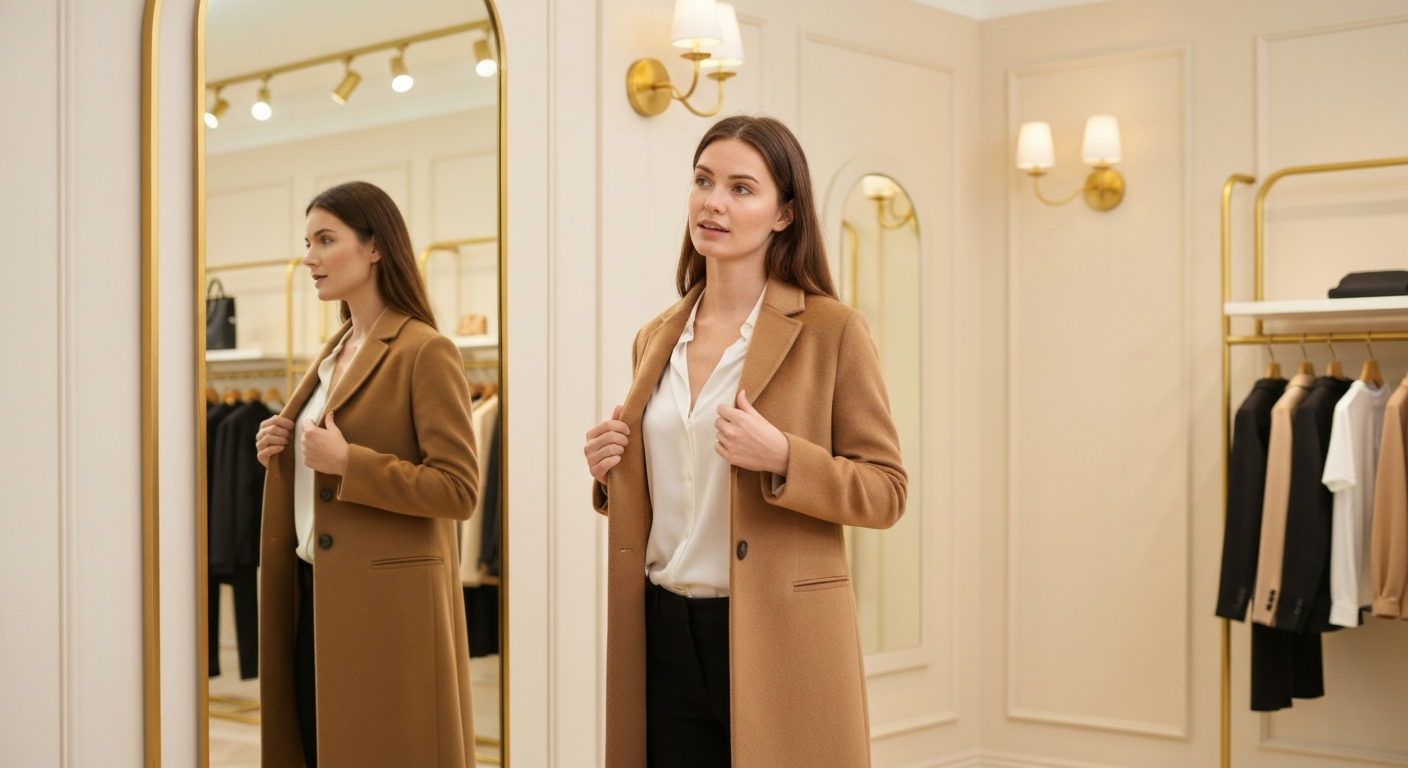
The right clothing for a sugar baby also depends on your dating profile. If you mainly appeal to business-oriented men on platforms like MySugardaddy, you need different outfits than someone who meets creative entrepreneurs or art collectors. Analyze the photos and descriptions of your matches - which style dominates?
For classic-conservative arrangements, the basic wardrobe described works perfectly. With more creative connections, it can be more individual - vintage designer pieces, unconventional combinations, statement accessories. What stays important: quality over quantity, fit over price.
Your sugar dating profile text should subtly reflect your style. Mention cultural interests that match your wardrobe - if you love going to the opera, people will expect you to dress accordingly. This consistency between online presentation and real appearance builds trust and prevents disappointment at the first meeting.
Return on investment: when does the wardrobe pay off?
A well-thought-out sugar baby wardrobe pays for itself faster than you might think. According to MySugardaddy statistics, the average monthly allowance in active arrangements is between $1,500 and $4,000. Even an investment of $2,000 is refinanced after one month in a six-month arrangement with a $2,000 monthly allowance.
Indirect benefits are harder to measure but real: confident bearing thanks to fitting clothes improves your negotiating position in allowance conversations. Several sugar babies reported that their monthly support rose after wardrobe upgrades - not through explicit demands, but through changed perception and self-presentation.
In the long run, strategic clothing purchases save money. Someone who aimlessly spends $100 a month on fast fashion has invested $2,400 after two years in clothes that have mostly become unusable. The same sum invested strategically in quality delivers a functional wardrobe that lasts years and can be added to continuously.
Regional differences across the US
In expensive cities like New York or San Francisco, prices run noticeably higher than in the Midwest - and so do expectations. A New York sugar daddy tends to expect a more polished wardrobe than a counterpart in a smaller city. The budget has to be adjusted accordingly, ideally through shopping trips and outlets instead of full-price boutique retail.
Conservative cities like Boston or Charleston maintain more traditional dress codes. Classic cuts and muted colors work better here than in the big coastal fashion hubs. Outlet shopping at Woodbury Common (near New York) offers a wide range of designer brands at reduced prices.
Style varies considerably between regions. Boston and Washington D.C. tend toward the conservative, Los Angeles and Miami allow more creativity, Chicago and New York appreciate fashion boldness. Adapt your wardrobe to your primary region, but keep a few neutral pieces ready for other cities.
The ultimate sugar baby wardrobe checklist
- A perfectly fitting blazer in a neutral color ($150-280): Combine with trousers, skirt, jeans or over a dress
- The little black dress with a modern cut ($180-300): Versatile styling for at least three different occasions
- High-quality leather pumps in nude or black ($140-250): For formal occasions and evening events
- Elegant flats or loafers ($100-180): For longer events, city trips or more casual dates
- High-quality leather bag as a constant companion ($250-500): Visible every day, should last at least five years
- Three to four combinable daytime outfits ($400-600 total): Blouses, skirts or trousers in neutral colors with high-quality fabrics
- Wool coat or trench coat for cooler months ($200-500): Depending on regional climate and style preference
- Statement accessories ($100-150): Necklace, earrings, belt or scarf to personalize basic outfits
- High-quality basic lingerie in nude and black ($150-250): Foundation for perfectly fitting tops
- Grooming and styling budget ($100-150 monthly): Manicure, hair, skincare as part of the overall investment
Frequently asked questions about the sugar baby wardrobe
How much should I minimally invest in my first sugar baby wardrobe?
A functional minimum is $800 to $1,200 for the absolute basics: a blazer, a black dress, quality shoes and a handbag. This investment covers about 60 percent of typical occasions. Ideally, you build the wardrobe over three to six months instead of buying everything at once, so you can learn from first experiences and avoid wrong purchases.
What clothing does a sugar baby really need to start?
Focus on versatile, combinable classics instead of specific single pieces: a timeless blazer, a knee-length black dress, neutral pumps, a high-quality leather bag and two to three daytime outfits in neutral colors. This base works for 70 percent of all appointments - from business lunch to theater night. You can add special pieces like evening gowns later or rent them when needed.
Are luxury brands worth it or are upscale mid-range labels enough?
For most sugar babies, quality brands like COS, Massimo Dutti, Sandro or Maje are entirely sufficient. The difference from true luxury brands is marginal in typical dating situations. Invest in perfect fit and high-quality materials instead of visible logos. The exception is handbags and shoes - here the premium is sometimes justified by longevity. But never buy fakes; they get noticed immediately and are counterproductive.
How do I care for my wardrobe so it lasts long?
Dry cleaning high-quality blazers and dresses after every third to fifth wear extends their lifespan considerably. Let shoes rest for 24 hours with shoe trees after each wear and care for them regularly. Hang dresses on padded hangers, store knitwear folded, keep bags stuffed in dust bags. These simple routines can extend the usable life by years and justify higher purchase costs.
Can I also buy secondhand or at outlets as a sugar baby?
Absolutely - smart sugar babies use these options strategically. Platforms like Vestiaire Collective offer authenticated designer pieces at 40 to 70 percent below retail. Designer outlets carry last year's collections at 30 to 50 percent off. With classic cuts, the recency of the collection doesn't matter. These strategies let you build a higher-quality wardrobe on the same budget or get identical quality at significantly lower cost.
Conclusion: strategy beats budget in the sugar baby wardrobe
The right clothing for a sugar baby is not a question of unlimited budgets but of strategic planning. A well-thought-out investment of $1,200 to $2,000 in combinable quality basics beats $5,000 of chaotic impulse buys. Analyze your actual occasions, invest in timeless classics instead of trends and prioritize fit over price.
Your wardrobe is a tool, not an end in itself. It should convey confidence, signal professionalism and let you focus on the relationship instead of outfit worries. When you no longer have to wonder while getting dressed whether something fits or is appropriate, you have made the right selection.
Start today with an inventory of your closet. Identify gaps based on your next three planned dates. Then visit MySugardaddy and find arrangements that suit you not only financially but also stylistically. The investment in the right wardrobe pays off many times over - in confidence, successful arrangements and lasting connections.